
Archaelogical Museum Siracusa
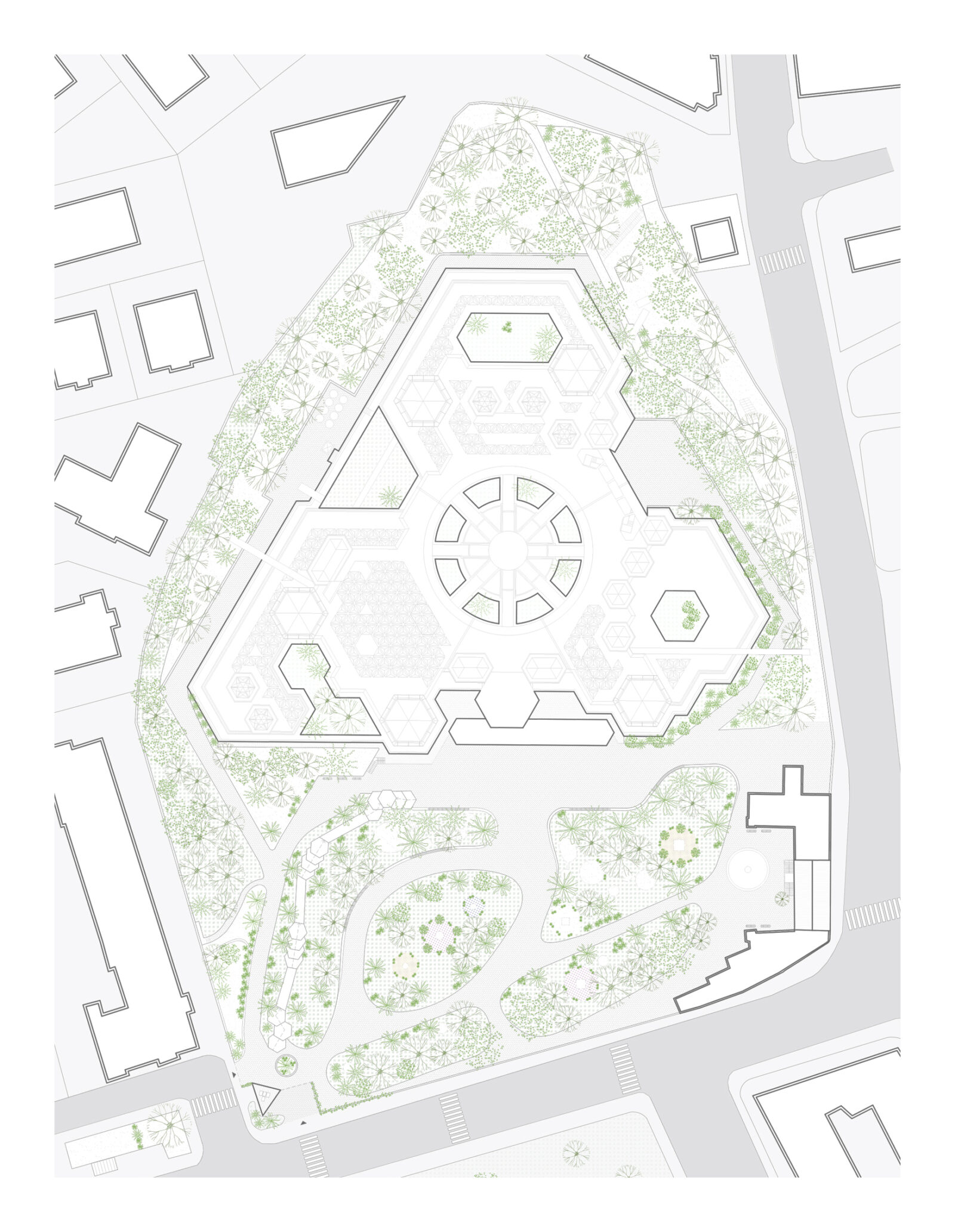
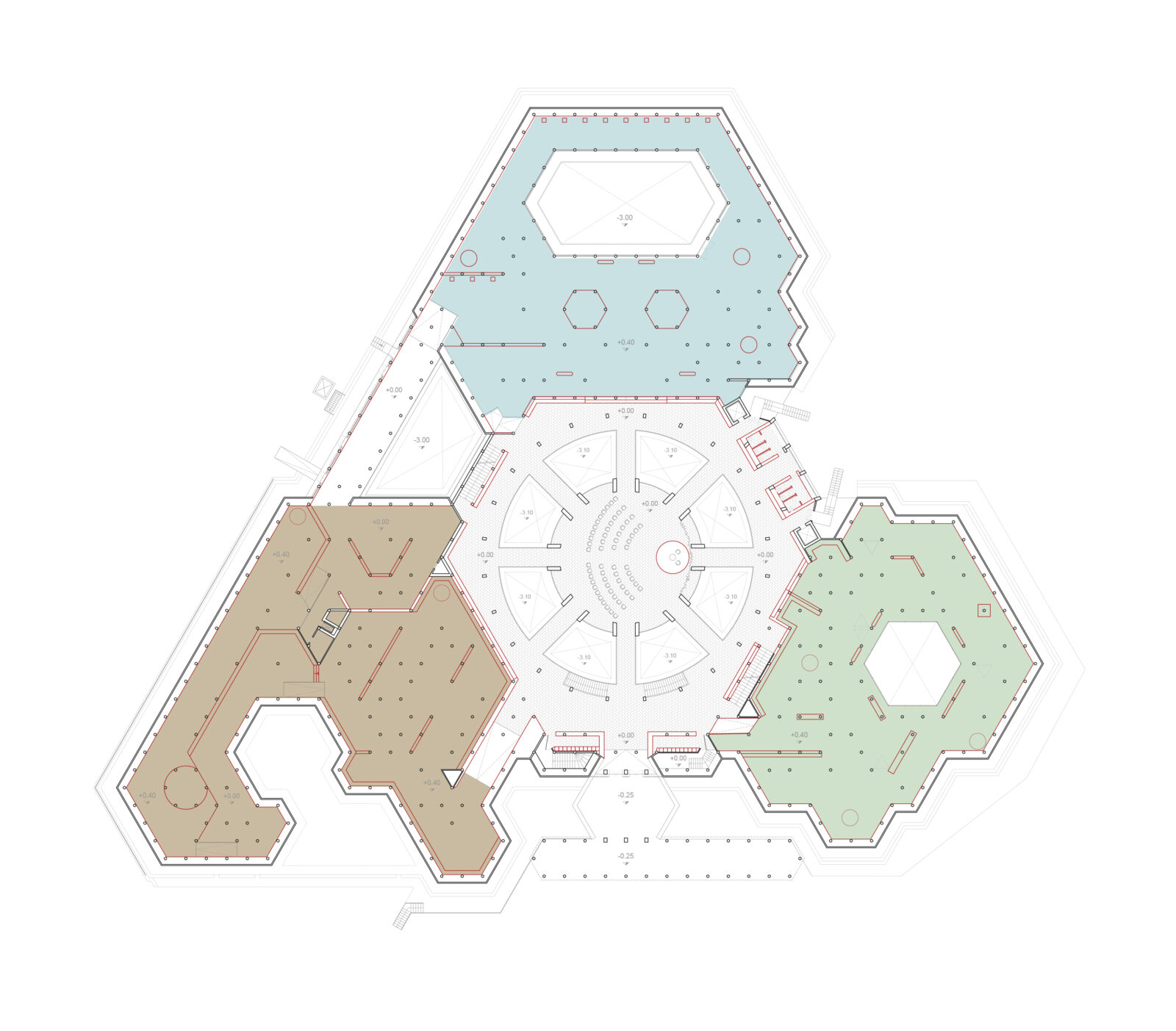
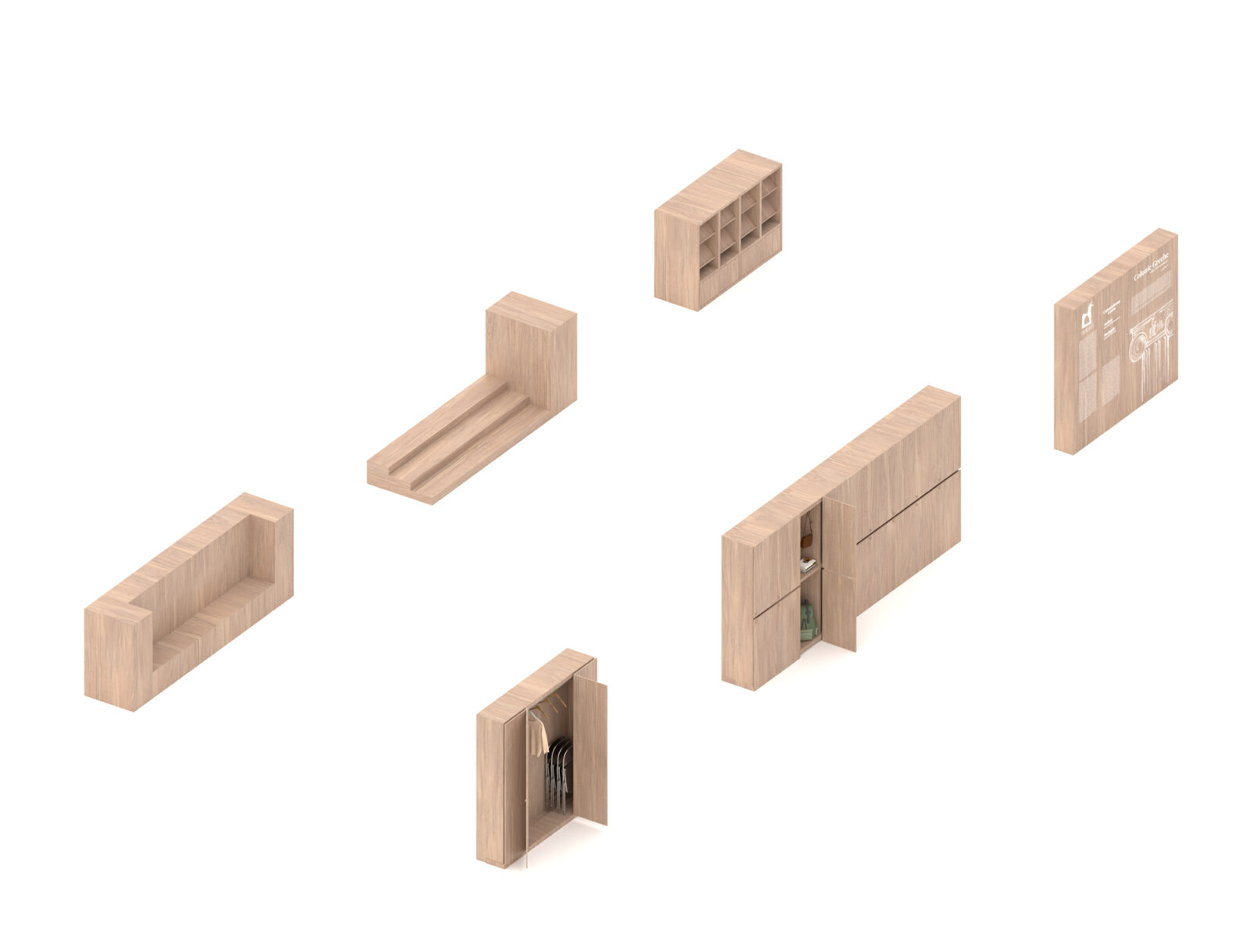
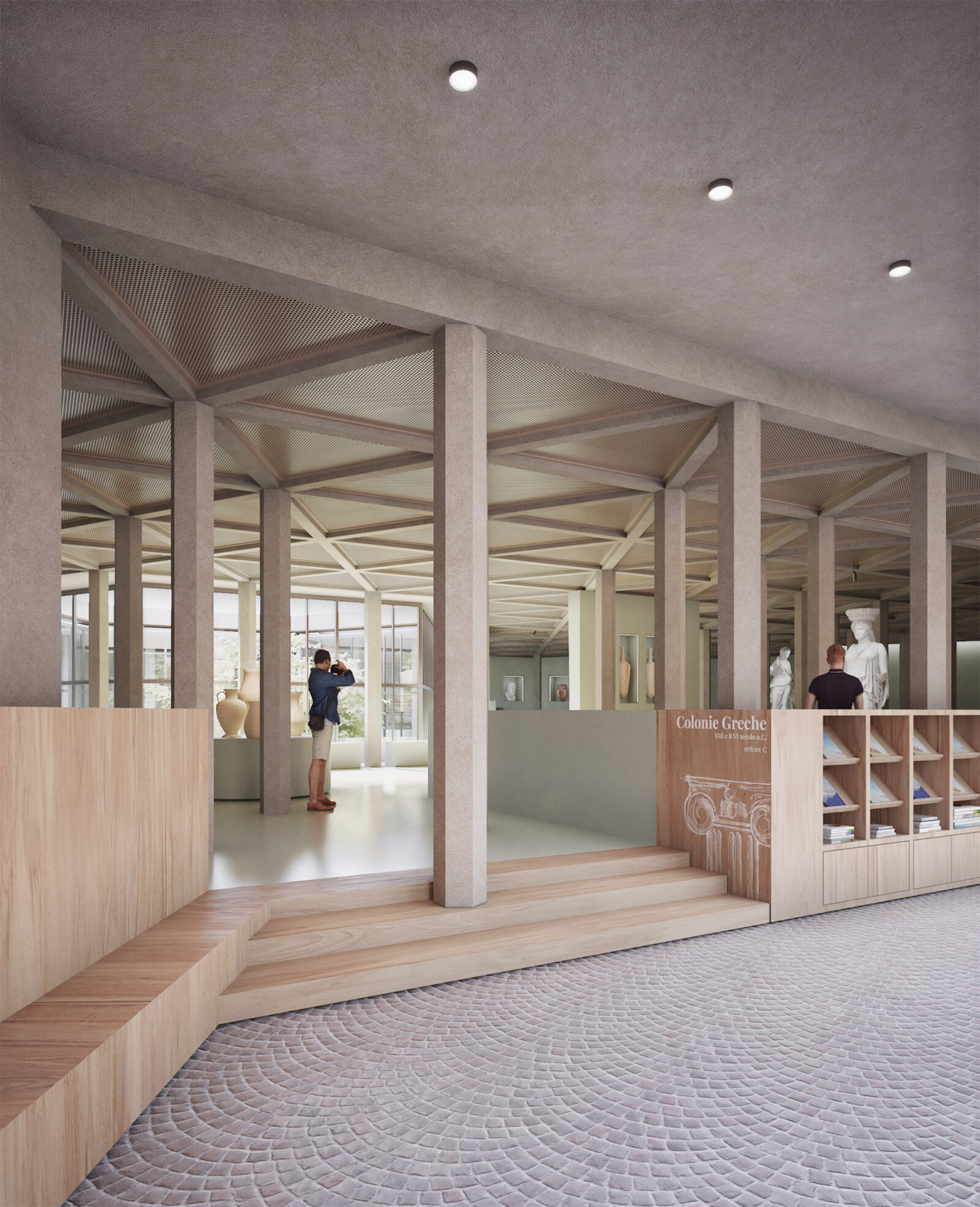
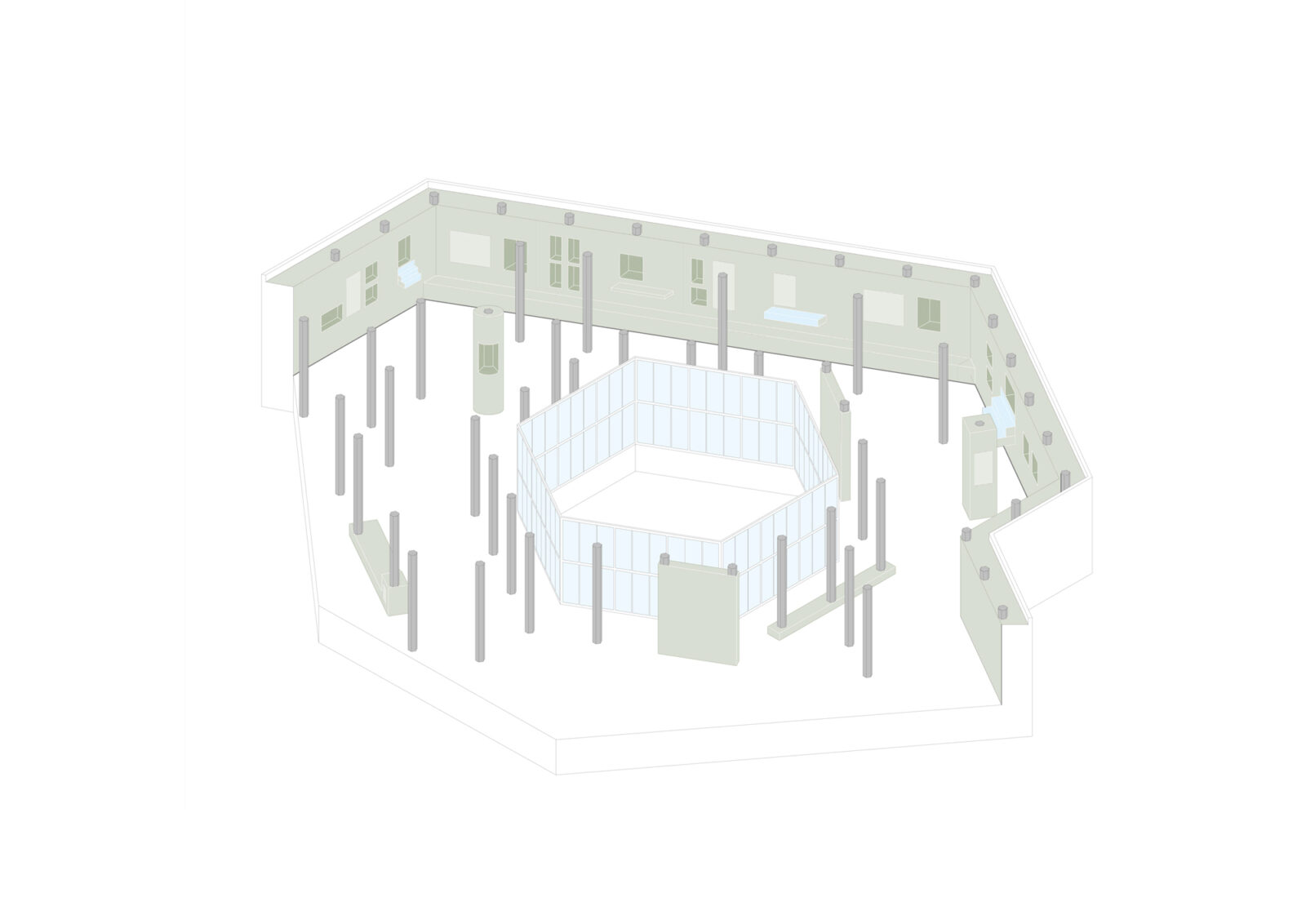
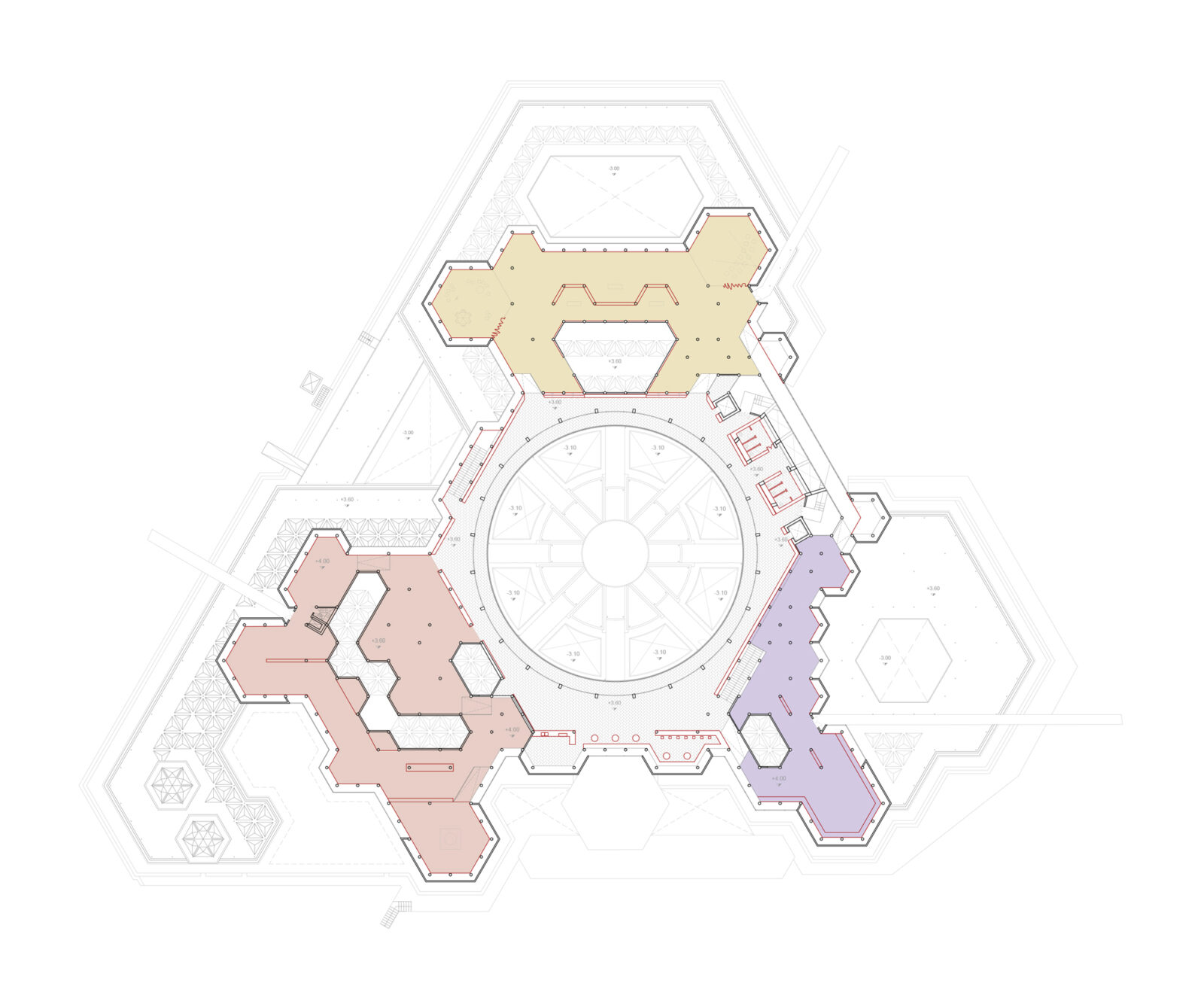
The project engages with Franco Minissi’s legacy through a process of deduction and subtraction, preserving the original material framework of concrete and porphyry while dismantling the rigidity of current visitor flows. The strategy is centered on a continuous horizontal device: a natural oak ribbon that follows the hexagonal geometry of the museum’s circulation.
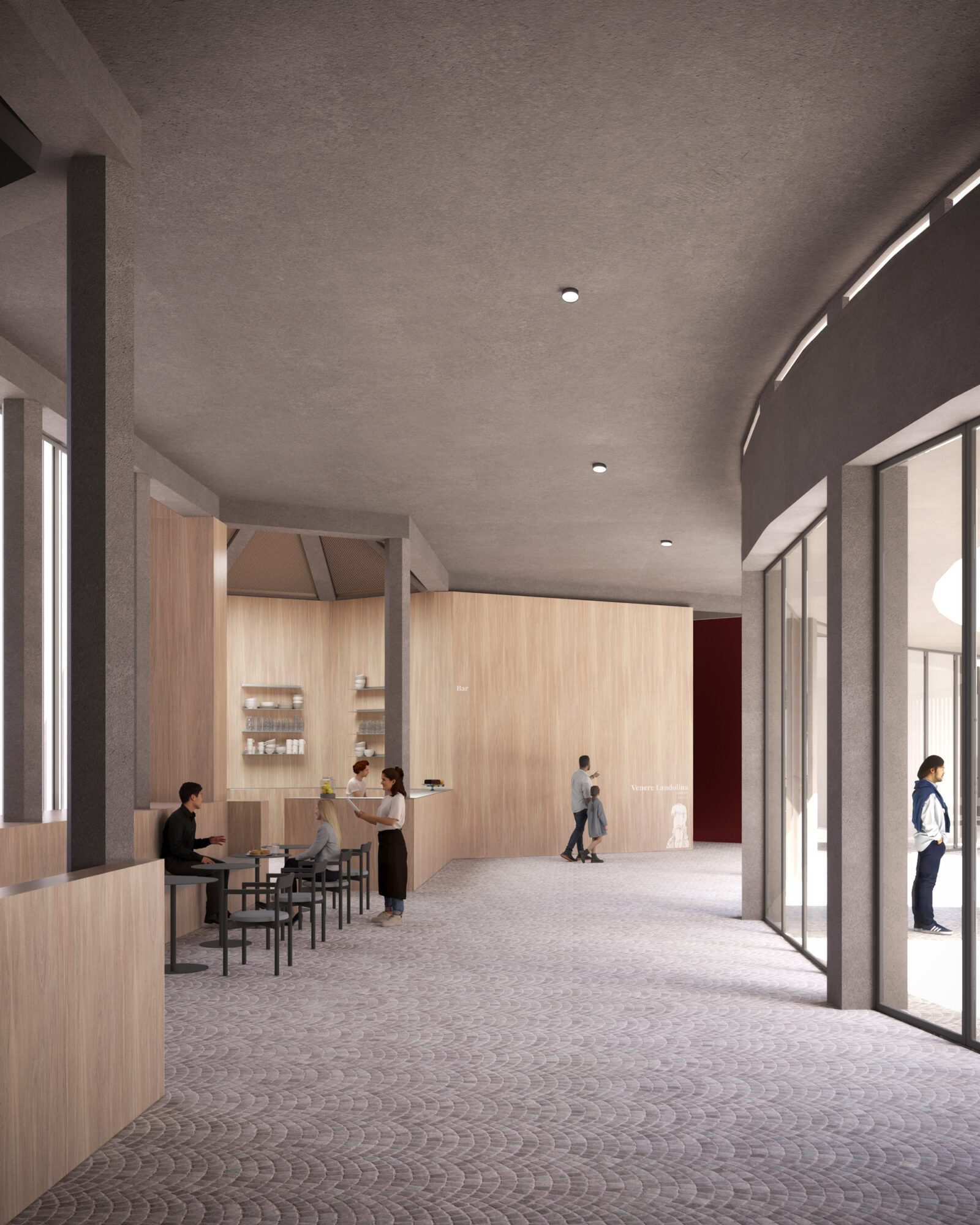
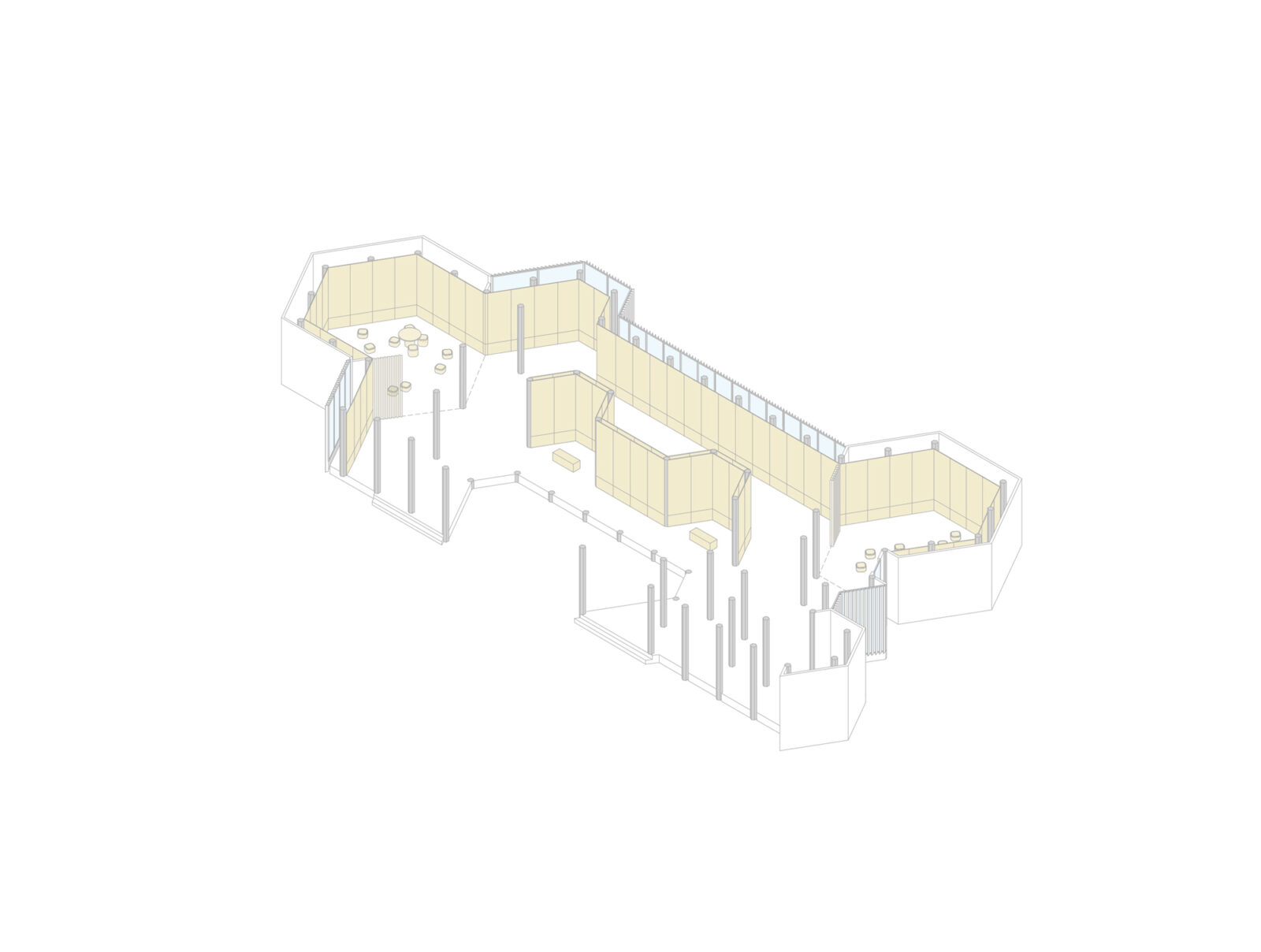
Standing at a constant height of 1.50 meters, this element functions as a multipurpose spatial infrastructure: it reconciles floor level changes, integrates seating and display cases, and serves as a permeable parapet. This design choice eliminates pre-existing vertical barriers, liberating the sightlines and restoring a unified perception of the entire museum organism.
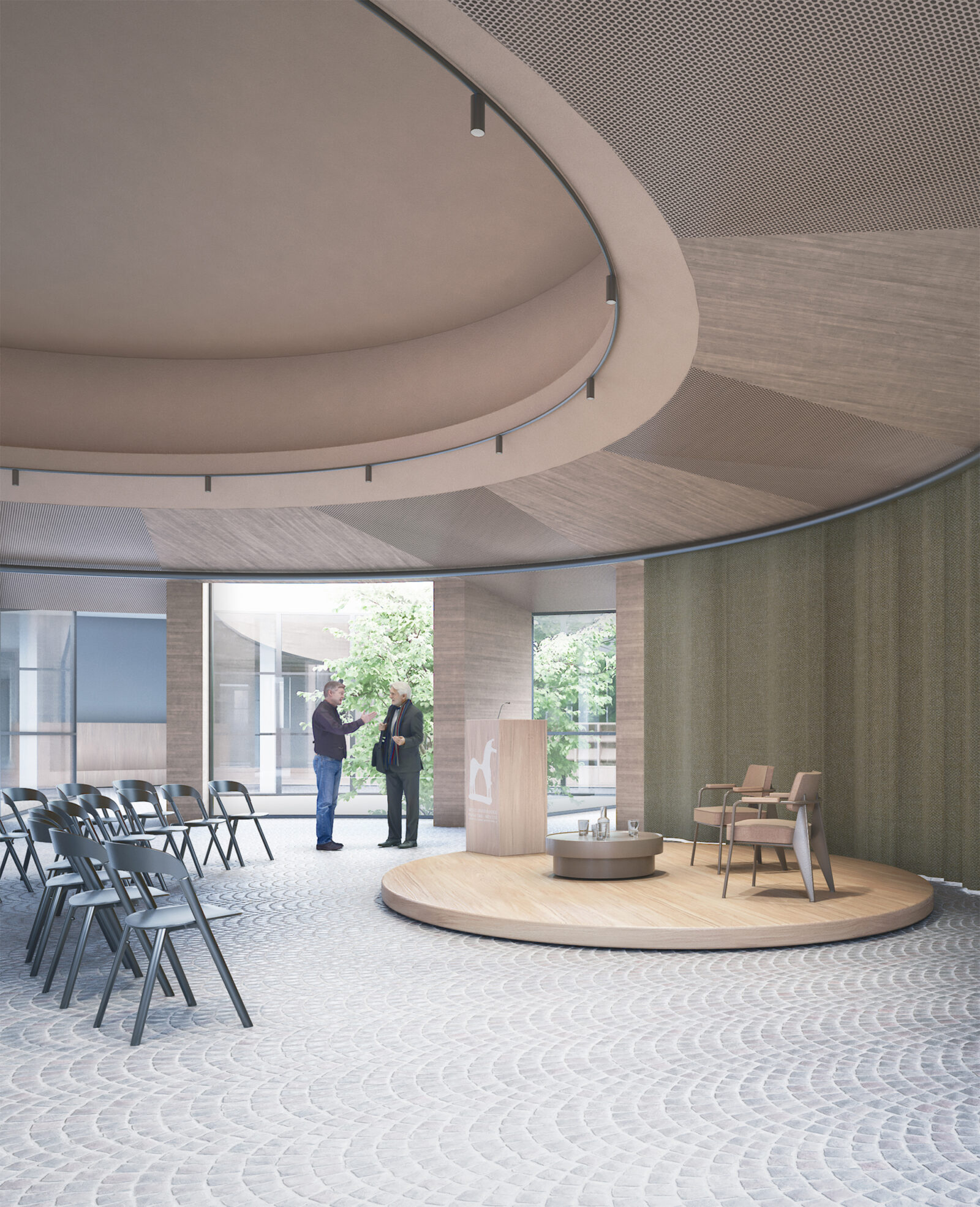
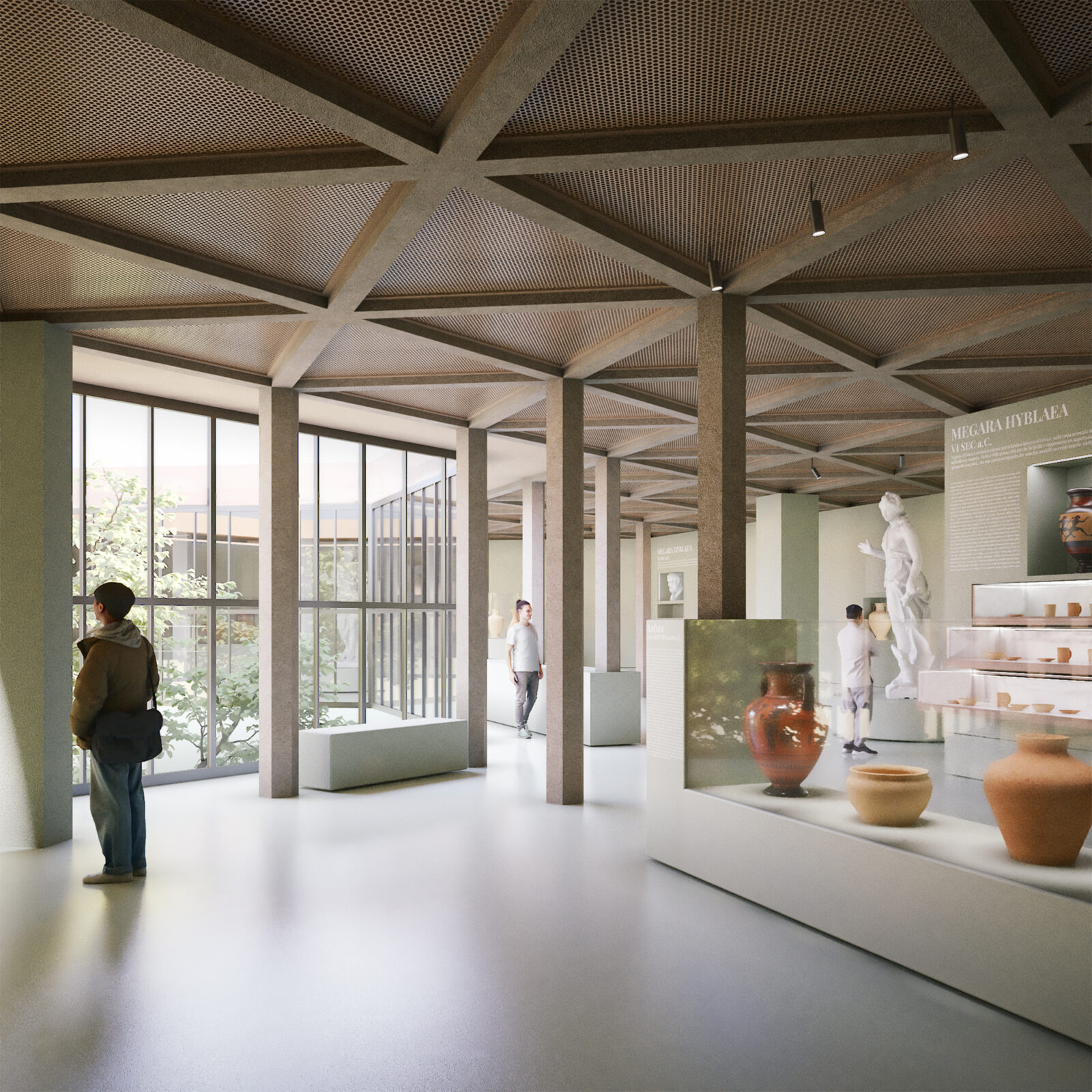
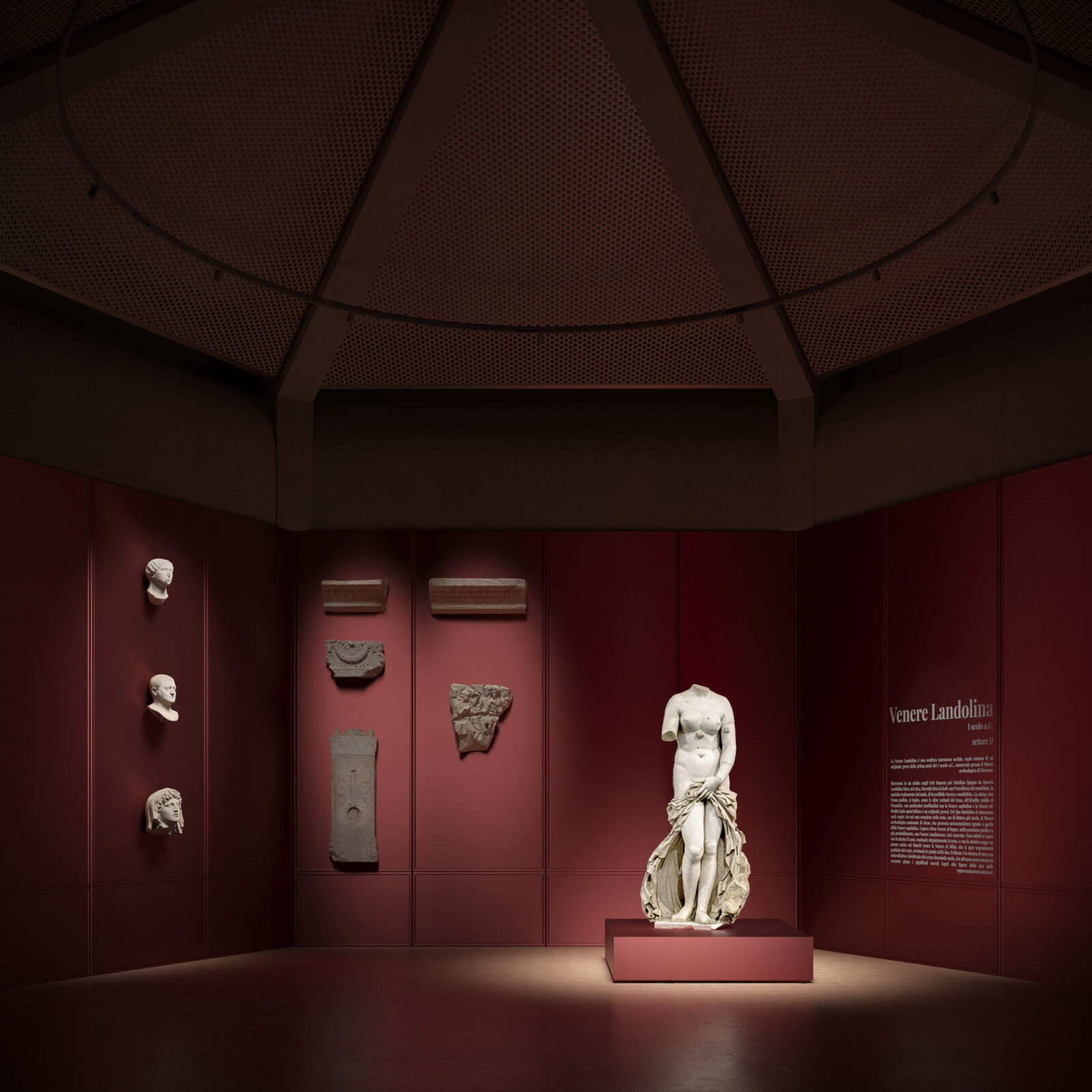
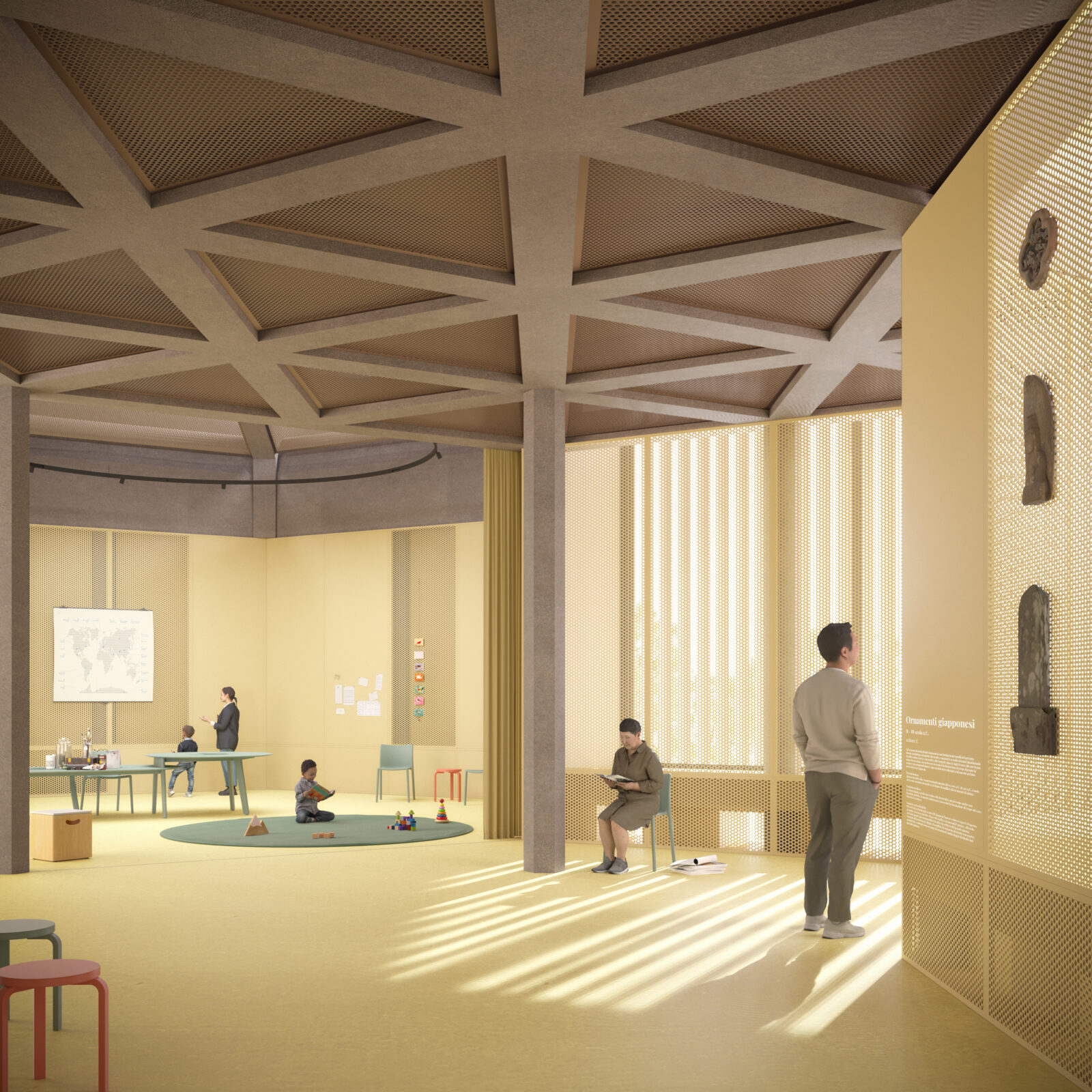
The scheme operates on a dialectic between neutral connectors and chromatic sectors, where color becomes a tool for orientation and characterizes the display areas. The central void is reconfigured as a flexible scenic device, capable of adapting to temporary uses via a mobile podium. Finally, the technical systems disappear within the triangular patterns of the concrete ceilings, where micro-perforated metal membranes seamlessly resolve the integration of lighting and architecture.
Client: Parco Archeologico e Paesaggistico di Siracusa
Year: 2025
Location: Siracusa, Italia
Architectural design: AFSa (Antonio Acocella, Pietro Seghi) + OPPS (Francesco Polci, Antonio Salvi, Paola Chiriatti)
Collaborators: Tommaso Vangi, Alessia La Novara (AFSa) + Davide Ferrera (OPPS)